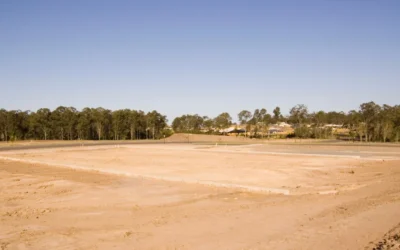
Spring and fall land clearing services in Livingston, Texas prepare properties for construction, wildfire prevention, or seasonal maintenance. Vickery Lawn Service, Land Clearing, and Stump Grinding offers forestry mulching and brush mowing for overgrown lots. The company serves Polk County with over 24 years of field experience.
Key Takeaways
- Winter in East Texas delivers milder temperatures, with highs in the 60s across Polk and San Jacinto Counties.
- Scheduling land clearing during cooler months prevents muddy headaches that overgrown lots from fall foliage create when spring rains arrive.
- Dry, firm ground during winter months supports equipment without tearing up the terrain.
- Clearing in the off-season saves time, cuts costs, and protects soil by avoiding heavy machinery damage that wet conditions cause.
Why time land clearing for spring and fall?
Winter in East Texas delivers milder temperatures, with highs in the 60s across Polk and San Jacinto Counties, making December through February a prime window for [land clearing services](https://vickerylawnservice.com/land-clearing-livingston-tx/property-clearing/). Scheduling work during these cooler months prevents the muddy headaches that overgrown lots from fall foliage create when spring rains arrive. Delaying clearing until wetter weather sets in risks project setbacks, equipment ruts in saturated soil, and extended timelines for construction or landscaping goals in Livingston, Texas.
What happens when land clearing waits until spring?
Overgrown vegetation left standing through winter turns into a liability. Spring rains saturate the ground. Heavy machinery working on soft, wet soil leaves deep ruts that compact the earth and damage its structure. These conditions stretch project timelines and increase costs. Land clearing is the process of removing plants, trees, rocks, and other obstacles so land can be developed, and attempting that work in muddy conditions compromises both efficiency and the final grade of the property.
How does off-season clearing protect the soil?
Clearing in the off-season saves time, cuts costs, and protects soil by avoiding the heavy machinery damage that wet conditions cause. Property owners in Livingston who act before spring rains lock in a smoother site prep phase and preserve the land’s long-term usability. Vickery Lawn Service brings over 24 years of field experience to these projects, matching the right equipment to East Texas timber density and bottomland conditions.
A winter land clearing guide for East Texas outlines how December through February scheduling positions properties for faster build starts and healthier soil come spring. Vickery’s forestry mulching in Livingston, TX clears shrubbery and small trees efficiently while leaving root structures that stabilize the ground, a method well-suited to the pine and hardwood underbrush common around Lake Livingston.

Tractors clearing out land
What problems does land clearing solve for Livingston property owners?
Land clearing solves four persistent problems for Livingston property owners: neglected appearance, wildfire risk, stalled construction, and dense East Texas vegetation. Land clearing services from Vickery Lawn Service address each issue with equipment matched to local timber density.
Why does overgrown vegetation hurt property value in Livingston?
Overgrown vegetation, dead trees, and debris make land look neglected. Clearing restores curb appeal and functionality, creating a clean, open space that attracts potential buyers. Vickery Lawn Service removes the visual clutter that suppresses a property’s marketability. The company’s five reasons to invest in land clearing explain how a cleared lot signals care and readiness to prospective buyers.
How does land clearing reduce wildfire risk near Lake Livingston?
Overgrown brush and dead trees are significant fire risks, especially in dry areas. Removing that fuel load protects homes, outbuildings, and timber stands. Vickery Lawn Service clears the understory that carries fire across a parcel. The result is defensible space that slows an approaching blaze.
What construction delays does uncleared land cause?
Land clearing is the first critical step before building a house, garage, or any structure. A cleared plot makes construction safer and more efficient. Contractors work faster on open ground. Vickery Lawn Service prepares sites so foundations, utilities, and access roads proceed without obstruction.
Wooded lake-area lots near Lake Livingston and brushy bottomland tracts require mulching, grubbing, and stump removal matched to timber density. Generic scraping leaves slash piles and root hazards behind. Vickery Lawn Service deploys selective methods that remove vegetation cleanly and leave the ground ready for its next use.
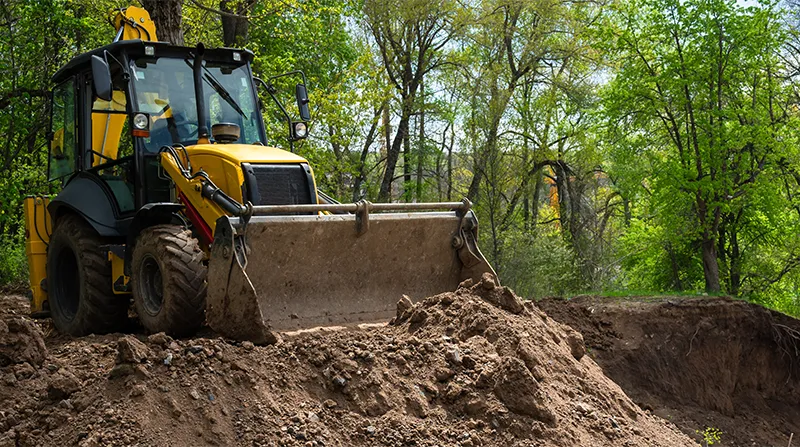
Tractor clearing land surrounded by trees
How does the land clearing process work from start to finish?
Land clearing transforms an overgrown Livingston property into buildable, usable space through a structured sequence of assessment, vegetation removal, and soil preparation. Vickery Lawn Service follows a proven workflow that matches the right equipment to East Texas timber density and site goals. Without a systematic approach, property owners risk incomplete root removal, soil compaction, and costly rework when spring rains expose hidden slash piles.
What happens during the initial land assessment?
The first step is a thorough site evaluation to determine the best land clearing services method for the specific terrain. Vickery Lawn Service inspects tree size, underbrush thickness, and access constraints before recommending an approach. Forestry mulching often emerges as the preferred technique because it eliminates trees and brush where they stand. As a result, there is no need to pile up, haul off, or burn the unwanted material, which saves time and preserves topsoil structure on lake-area lots near Lake Livingston.
How does the actual vegetation removal work?
Equipment selection drives efficiency during the clearing phase. For dense stands of small trees, hydro-axing deploys a giant shredder attached to a tractor that lifts blades to the top of the vegetation and grinds downward in minutes. The process leaves only wood chips behind, creating a clean surface without the debris piles that attract pests and block drainage. For mixed hardwood underbrush, forestry mulching handles shrubbery and saplings in a single pass. Property owners preparing acreage for construction or wildfire prevention benefit from this selective approach, which avoids the scorched-earth results of generic scraping. A detailed walkthrough of the full sequence is available in the guide on what to expect from the property clearing process.
What happens after the vegetation is gone?
Once the land is cleared, soil preparation begins immediately to stabilize the site. This phase includes grading to establish proper drainage, leveling to create a flat building pad, and packing down the dirt to prevent settling. Skipping this step leaves Livingston properties vulnerable to erosion during the region’s heavy spring rains. The company’s operators work the soil to match the project’s end use, whether that means a compacted base for a shop foundation or a graded slope for pasture reseeding.
What equipment and methods does Vickery use for seasonal clearing?
Vickery Lawn Service deploys specialized equipment matched to each Livingston property’s terrain and vegetation density. The company’s land clearing services division runs forestry mulching, underbrush removal, hydro-axing, batwing and brush mowing, swing arm cutting, and general property clearing. Methods are chosen to balance speed, selectivity, and site goals for every job.
What clearing methods work best for East Texas underbrush?
Livingston lots with dense pine and hardwood regrowth demand equipment built for thick material. Forestry mulching grinds vegetation in place, leaving a protective ground layer that resists erosion. For larger open acreage, batwing and brush mowing cover ground quickly. Hydro-axing in East Texas and swing arm cutting handle heavier stems and roadside overgrowth where precision matters.
Operators with over 24 years of hands-on expertise deliver consistent results across seasonal conditions. The 10-employee team matches each machine to the property’s access, slope, and regrowth stage rather than forcing one method onto every site.
How does Vickery decide between mulching and mowing?
The decision follows a site assessment of vegetation type, density, and the client’s end goal. Forestry mulching suits selective clearing where soil protection matters. Brush mowing fits open fields needing fast, uniform reduction. Underbrush removal targets the low growth that returns aggressively after East Texas winters.
Each method leaves Livingston properties ready for spring construction, planting, or firebreak maintenance without slash piles or root hazards.
How do I get started with a free estimate for my property?
Securing a free estimate for land clearing services in Livingston, Texas begins with a direct inquiry to Vickery Lawn Service. The company structures this initial step to let property owners clarify project scope, timelines, and access considerations without any obligation. Transparent communication anchors the process from the first conversation through project completion.
What details should I prepare before requesting an estimate?
Property owners benefit from having a few key details ready. The team discusses the acreage size, current vegetation density, and intended land use during the estimate. Access points and any buried utilities also shape the preliminary plan. This preparation keeps the conversation focused and efficient.
How long does it take to receive a free estimate?
Response times stay fast thanks to a straightforward contact process and published operating hours. Most Livingston clients receive a prompt follow-up to schedule an on-site walkthrough. The company serves Polk County and surrounding East Texas communities routinely, so familiarity with local terrain speeds the scheduling. Busy property managers and homeowners find the system built for convenience.
The estimate covers maintenance plans, equipment needs, and realistic timelines. Vickery Lawn Service emphasizes customer satisfaction by ensuring every question finds an answer before work begins. No deposit or commitment attaches to the estimate, making it a risk-free way to evaluate land clearing services for residential or commercial acreage.
FAQ
Why should I schedule land clearing in spring or fall?
Winter in East Texas delivers milder temperatures with highs in the 60s. Dry, firm ground supports equipment without tearing up the terrain.
Conclusion
Scheduling land clearing in spring or fall protects Livingston properties from the soil damage and scheduling delays that come with wet-season work. Property owners who act during these windows secure firm ground conditions, faster project timelines, and a clean site ready for construction, planting, or firebreak maintenance. Contact Vickery Lawn Service to schedule a free estimate and begin preparing your acreage for the season ahead.